

What Happens at a Relationship Skills Bootcamp? A Two-Day Workshop Explained
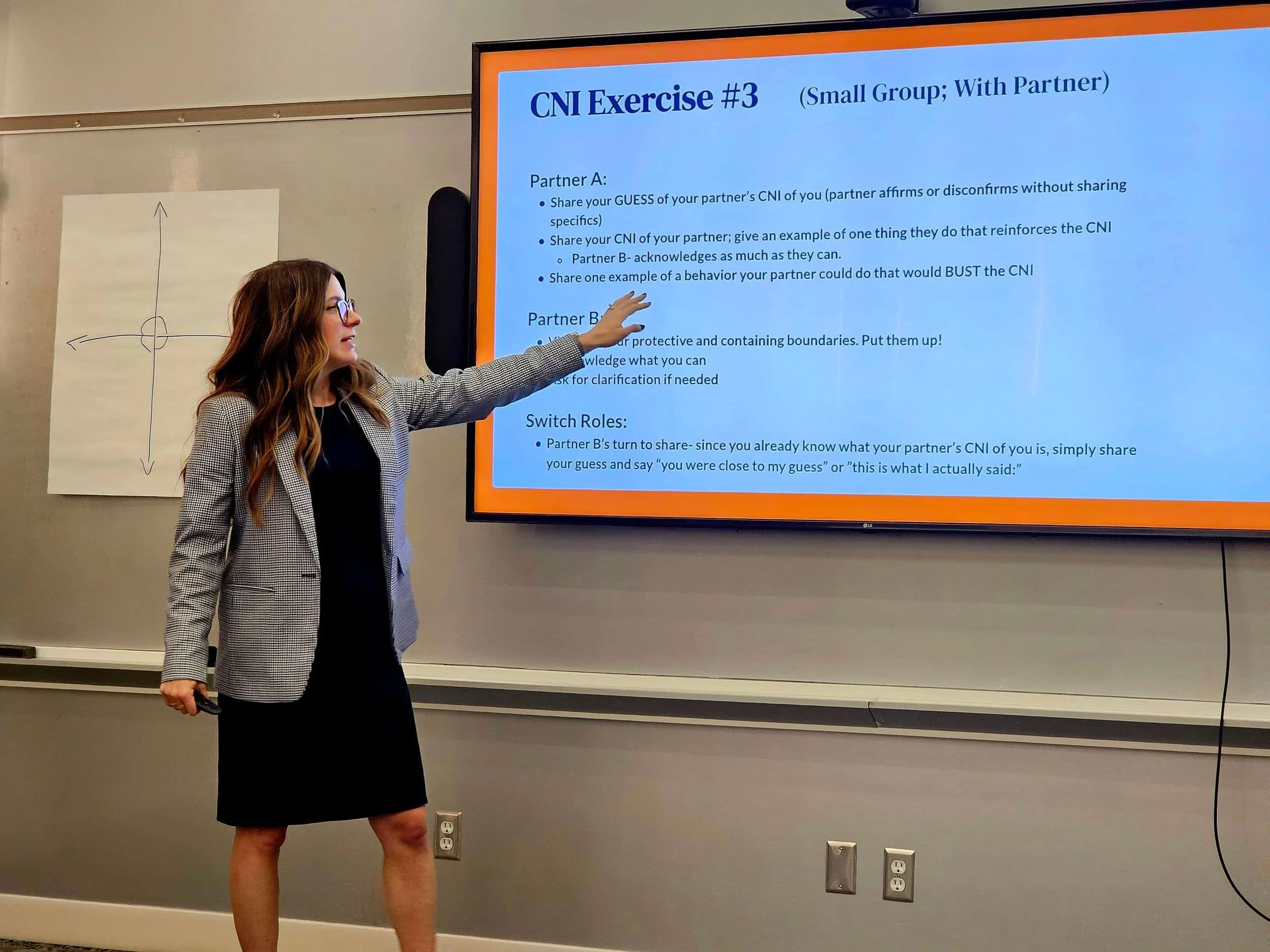
You're thinking about the Essential Relationship Skills Bootcamp, often called an “RLT Bootcamp.” This workshop is based on Relational Life Therapy (RLT), the model developed by renowned therapist Terry Real.
Maybe your therapist suggested it.
Maybe you've been stuck in the same argument for years.
Or maybe nothing is “wrong” but you want to feel like a team and communicate better.
But you have questions.
What does a two-day relationship workshop actually look like?
Will you have to share personal details in front of strangers?
What if your partner won't come?
Is it therapy, or a class?
What actually happens in the room?
Here's what to expect.
The Format: How the Two-Day Relationship Bootcamp Works
The Essential Relationship Skills Bootcamp runs for two full days, from 9 AM to 5 PM. You'll receive a packet with handouts and worksheets. Coffee and tea are available.
Here's the rhythm of the workshop:
Teaching for 20-30 minutes with the large group
Breaking into small groups of 3-4 people for discussion
Repeating this cycle throughout the day of learning, discussion, and integration
There are regular breaks and we break for lunch (lunch is on your own).
Important: If you attend with a partner, you are intentionally placed in separate small groups on Day One. This creates space to reflect and share honestly without worrying about your partner’s reactions. You’ll only work directly together on Day Two.
The most important rule: You can pass on anything.
You choose how you participate. There is no forced sharing. Most personal conversation takes place in small groups of 3-4 people, not in front of the whole room, and even there, you only share what feels right.
The group ranges from 15-30 participants with a mix of couples and individuals.
Day One: Understanding What Keeps You Stuck
Day One focuses on understanding your patterns: what keeps repeating in your relationship, where it comes from, and why it’s been so hard to change.
What You'll Learn on Day One
The Five Principles of Relational Living
The core assumptions underlying Relational Life Therapy—the "why" behind the skills you'll learn.
Self-Esteem and Boundaries
Self-esteem and boundaries are necessary skills for intimacy. You’ll learn how your relationship with yourself shows up in your relationship with your partner. You'll learn the difference between healthy self-esteem (same-as) and the extremes most of us swing between (one-up grandiosity or one-down shame). You'll also learn about boundaries, which allow you to share your reality and take in another’s perspective without becoming defensive, flooded, or dismissive
The Relationship Grid
A relational assessment tool that shows exactly where you go when you're upset. Take an assessment here if you're curious to learn more.
The Five Losing Strategies
Our automatic responses when we’re stressed get in the way of the connection we want. You’ll learn about where you tend to trip up in tough moments. Being right, controlling your partner, unloading without a filter, retaliating, withdrawing—these are automatic responses that thwart intimacy. You'll see which ones you default to and why.
The Adaptive Child and Wise Adult
The adaptive part of you that developed survival strategies as a kid and the part that can respond with intention as a mature adult. This framework sheds light on why you keep doing things that aren’t working. You can learn more about the Adaptive Child and Wise Adult here.
By the end of day one: You'll have a clear map of your patterns. For most people, this is the first time they've seen their relationship dynamics this clearly.
“The biggest insight was not needing someone else to change for me to be OK.” - A.D., Minneapolis, MN
Day Two: Learning What Actually Works
Day two is more practical. You'll learn specific techniques and practice them.
We start with a longer check-in because we discuss a written reflection homework assignment from day one. Then we move into more teaching, discussion, and practice. If you come with a partner, you'll practice together later in the day. If you come alone, you'll practice with other participants or observe.
What you'll learn on Day Two:
Core Negative Image
The reason couples can have the same fight for 30 years. Understand what happens and a tool for how to interrupt it.
The Five Winning Strategies
Good news, there are things you CAN do to make things better, not just pitfalls to avoid. You’ll learn concrete, specific techniques that build connection.
The Feedback Wheel
A four-step framework for repairing conflict without attacking or avoiding. Most couples report not having a process for repair, which keeps them stuck in painful patterns. The feedback wheel is a tool you can use to come together and heal after tough moments.
Effective Time-Outs
How to pause an escalating argument in a way that feels caring, not provocative. Most people do a version of time out that enflames conflict. You’ll learn a way to do it that takes care of the relationship while also taking necessary space to cool off.
Repair Skills
How to apologize effectively (most people miss critical steps). How to accept repair when your partner tries. How to recover after you've messed up.
Keeping It Going
What to do after the bootcamp to maintain progress. Daily practices. How to catch yourself before sliding back into old patterns.
Throughout day two, I move between small groups providing coaching. You choose how much you share and practice.
What the Bootcamp Is (and Is Not)
Changing Your Defaults, Changing Your Legacy
Most of us are running on autopilot in our relationships, repeating patterns we learned from our families or culture without ever choosing them consciously.
You snap at your partner the way your mom did.
You shut down like your dad.
You avoid money talks the same way your parents did.
These aren't character flaws, they're defaults.
This bootcamp is about recognizing those defaults and choosing something different. This is not just for your relationship now, but for the relationships that follow and the generations to come.
One participant summed up their experience as, "changing my legacy."
That's what this work is about. You're not just learning communication skills. You are interrupting generational patterns and choosing what to pass on instead of unconsciously repeating what was passed to you.
Skills We Wish We Learned Earlier but Didn't
Think of this as the relationship education you needed but didn’t get. Most of us (myself included) were never taught how to repair after a fight, set a boundary without being harsh, or express hurt without blame and be heard.
The bootcamp teaches these skills drawing from Relational Life Therapy (RLT). I'm certified from the Relational Life Institute to teach this workshop. But more importantly, I practice these skills in my own life. I attended this bootcamp with my husband before becoming a facilitator and it changed how we handle conflict.
Not Therapy
This is educational. While the experience is often very healing, this isn’t group therapy and you aren’t expected to share your problems publicly. If you're currently in therapy, the bootcamp can reinvigorate your work, giving you a clear framework and specific tools to practice. It will get you out of talking about the ‘news of the week’ and instead focus on changing your patterns of interaction. This workshop condenses about 7-10 months of therapy learning and practice in two days.
I recommend prospective couples begin with the bootcamp so therapy can dive deeper and progress more efficiently. Some participants don’t continue with therapy because they learn enough to practice on their own.
Intensive But Safe
You may feel some discomfort as you look honestly at your patterns. Most participants find this format gentler than therapy because you're learning skills and a framework, not being put on the spot. One participant said, “it’s like taking a superfood.”
What You'll Walk Away With
After two days, participants commonly report leaving with:
Clarity about what’s been happening—specific patterns with names, not vague “we need to communicate better”
Self-compassion tools for working with the inner critic and tending to the Adaptive Child
Concrete skills for repair, time-outs, and difficult conversations
A shared language with their partner (if they attend together)
Confidence that change is possible, regardless of what anyone else does
What Participants Say
“We've been stuck for several years. After a year of couples therapy with numerous false starts, we were still stuck. We were not showing up relationally and were not giving each other space to be relational. [After the workshop] I feel like we have come down to earth and met eye to eye.” - December 2024 Participant
“I came into the room wondering who these troubled bunch of rubes were and left feeling like I was saying goodbye to some of my best friends. An amazing environment” - October 2024 Participant
“Finally something concrete, not just 'communicate better” - Anonymous
Common Questions
Will I have to share my problems in front of everyone?
Definitely not. Most sharing happens in small groups of 3-4 people. In small groups you choose what you share (if anything at all). I've had personal friends and colleagues attend precisely because the format doesn't require public disclosure.
"Sarah created a very safe space. Sharing with others and practicing the tools in small groups was incredibly helpful." — Anonymous
What if my partner refuses to come?
Come alone. You can be part of the solution. You can start to change things in your relationship by doing things differently on your side of the street. Many people attend solo—either because their partner isn't ready or because they're single and learning for next time.
"I attended as an individual so I will put these things into action at home. I feel optimistic and hopeful—I have the tools now, just need to keep practicing." — Anonymous
What if practicing with my partner feels awkward?
It probably will. Have a beginner's mind. Recognize that it is uncomfortable being new at something and discomfort is OK. On day one, you're in separate groups. On day two, you only practice together if you want to. You can observe instead.
We're doing fine. Is this still worth it?
Absolutely. You know how people say "relationships take work"? The skills you learn here are the work they're talking about.
"It was good before, but now I hope it's even better going forward." — M.S., Woodbury, MN
"I felt good coming in. I feel even better going out. I feel more understood and loved. I feel lucky." — Anonymous
I'm a therapist. Can I attend?
Yes. I love having therapists in the workshop. Twelve CE credits available and approved by the MN BMFT. You can also apply for CE credits from your board. Relational Life Therapy is unique because the therapist is a fellow traveler, standing as an expert above the clients. You'll learn to apply and experience RLT personally while understanding it theoretically.
"So many of my clients need this to get out of entrenched ways of thinking." — Therapist Participant
"My perspective is similar, but I feel more clarified and empowered on how to teach these skills to my clients." — Therapist Participant
Is this workshop affirming of LGBTQIA+ relationships and non-monogamy?
Yes. All are welcome.
This Bootcamp Works Well For
Couples stuck in repetitive arguments
Individuals whose partners won't come to therapy
People in crisis who need change now
People doing well who want to strengthen their relationship
Single people learning skills for future relationships
Therapists wanting to learn RLT personally and professionally
Wait to Attend If You're Experiencing
Active untreated addiction or very recent sobriety
Ongoing physical or sexual violence
Severe untreated mental health conditions
An active affair or an affair that was just disclosed
You genuinely don't want to be here
Not sure if bootcamp is right for where you are? Email me with questions or schedule a 25 minute consultation.
Practical Details
Next Steps
If you’re tired of talking about change and want to learn how to do it, this workshop is for you.
Ready to register? Sign up here.
Have questions?Email me or schedule a 25 minute consultation.
Therapists: If you're considering referring clients check out this blog post about why to refer a client to the bootcamp or please reach out. I'm happy to talk through specific situations.